
Eight Faculties of Awakening
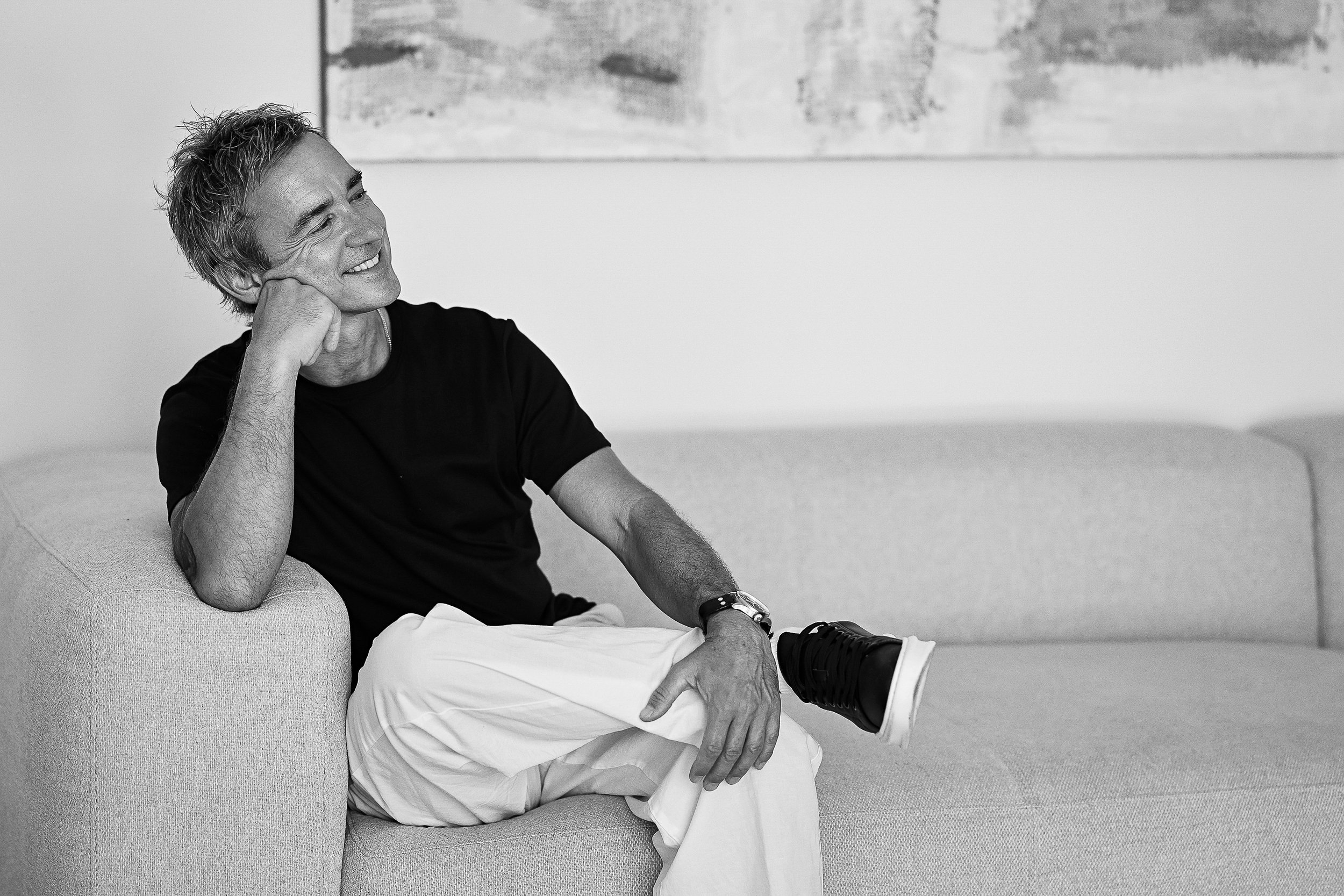
This Atlas grew out of an opening two years ago — sudden, complete, paradoxical and mystical in its core.
How it happened, in full, is told in the Notes.
Forty years of yoga practice were already in the body when it hit. Twenty years of teacher trainings. Years with nondual teachings. Without those forty years in my bones, I would have come apart at the seams. My nervous system is still catching up every week with new experiences.
I recorded those in almost 2,000 conversations — knowing that this is territory so complex and so individual that no singular practice or method could create any of it. I started to put them into categories which I now call faculties — capacities of a human being.
What I came to understand: I was working in many layers of the human body-mind system. For practicing those layers you will find here eight faculties — your capacities for liberation and awakening.
The Eight Faculties
Eight capacities of a human being. Not departments of an institution — directions of looking at the same field.
The phenomenological heart of the Atlas. It begins neither with a worldview nor a scripture, but with one question: what is actually experienceable right now, before interpretation? Awareness, the sense of self, perception, time, space, non-separation, love, agency — recognition asks the same question of each of them, and asks it as directly as it can be asked.
Experience — a content of consciousness. Recognition — the knowing within which every experience appears. State — a time-limited condition. Trait — a changed baseline over time. Interpretation — the meaning mind, culture or tradition assigns to it.
The full working material for this faculty is being written into the book.
The intellectual, historical and contemplative spine — grounding direct experience in the traditions that have mapped it for over a thousand years: Śiva and Śakti, Prakāśa and Vimarśa, the 36 Tattvas, and the living line of the Trika down to today. Personal experience is kept in dialogue with text that has mapped this territory before.
For depth beyond what these pages can hold, Christopher Hareesh Wallis’s teaching and translation work at tantrailluminated.org is the primary further reading.
What happens when Recognition meets a human organism with attachment history, protective patterns, memory and an autonomic nervous system? This faculty holds the nervous system, attachment, emotion and trauma-processing work with the same care it holds recognition itself.
Awakening changes the context the human system is experienced in — the system itself remains as human as ever. Recognition opens capacity. Secure attachment, professional treatment, repair, and boundaries stay just as necessary alongside it.
How is consciousness experienced as vitality, breath and vibration? Prāṇa, the vāyus, chakras and Kuṇḍalinī are held here across three registers at once — traditional, phenomenological and physiological — kept in relationship rather than collapsed into one another.
Forty years of practice and teaching, distilled into one throughline: yoga as the embodied art of recognition. Asana, alignment, pranayama and meditation — practiced as Receive, Align, Express, a structure that echoes the classical Icchā–Jñāna–Kriyā triad without copying it.
Possibly the most relevant faculty over time: how is awakening lived once the retreat is over — in relationship, work, sexuality, money, aging and death? Progress is measured plainly: stability, wisdom, capacity for love, truthfulness, kindness, and steadier ground under pressure.
A translating space where contemplative traditions, psychology, neuroscience and extraordinary states meet with epistemic care.
The operative heart of the Atlas — where every practice from every faculty lives. Grounding, regulation, concentration, insight, recognition, energy and integration practices, organized by what a human being can actually do today.
Four Layers of Human Experience
The shape underneath the story above, named in structure.
Signature Model
This model prevents two typical shortcuts:
“Everything is Awareness, so trauma doesn’t matter.”
“Everything is nervous system, so spiritual recognition is just regulation.”
Both are too small.
Layer 1
The open context of every experience. Not produced, not located, not personal. The ground that remains undamaged while everything appears within it.
Layer 2
Activation, charge, pulsation, expansion and contraction. Prāṇa, Kuṇḍalinī, the felt aliveness of the body. The vibratory dimension between pure awareness and organized form.
Layer 3
Nervous system, attachment patterns, memory, parts and protection. The conditioned architecture through which experience is filtered, stored, defended and repeated.
Layer 4
Interpretation, narrative, decision, behavior and relationship. Where recognition becomes ethics, creativity, service, conflict, repair and participation in life.
Four Filters
The promise behind every page
Every teaching in the Atlas passes through the same sequence: how it teaches, what it may claim, whom it protects, and what it is measured against. Nothing is offered without a same-day practice, without saying plainly what kind of claim it’s making — traditional, phenomenological, clinical, empirical, hypothesis or metaphysical — and without being weighed against six questions: does it increase contact with reality, does it increase capacity for relationship, does it increase freedom without reducing responsibility, does it increase embodied presence, does it permit uncertainty, and does it reduce unnecessary harm?
The guided path
The eight faculties are the permanent architecture — what this Atlas holds. The guided entrance into it, on-demand and at your own pace, is The Immersion, built and taught together with Lydia.
For coaches, therapists, and space-holders: PranaSomatics runs its own four-month live Immersion and coach certification track, separately from the on-demand path above.